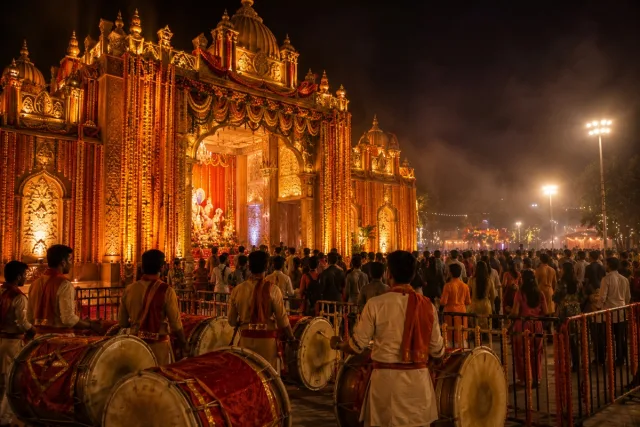
Every year, the ten (or eleven, or one-and-a-half) days between sthapana and visarjan turn into India's biggest informal content festival. The moment a mandal pulls back the curtain on a freshly decorated murti, phones come out, Reels get filmed, and by evening half the city's WhatsApp status updates are the same darshan clip from five different angles.
This is a curated round-up, not a ranked chart — nobody publishes an official "most viral murti" leaderboard. What follows is what's actually dominating pandal-hopping conversations, mandal WhatsApp groups and festival feeds this Ganeshotsav: the icons that never go out of style, the styles genuinely trending upward, and the regional flavours that make Ganesh Chaturthi look different depending on which state you're standing in.
The icons everyone still talks about
Before the trends, the constants. A handful of mandals are so established that they set the benchmark every other pandal is quietly compared against:
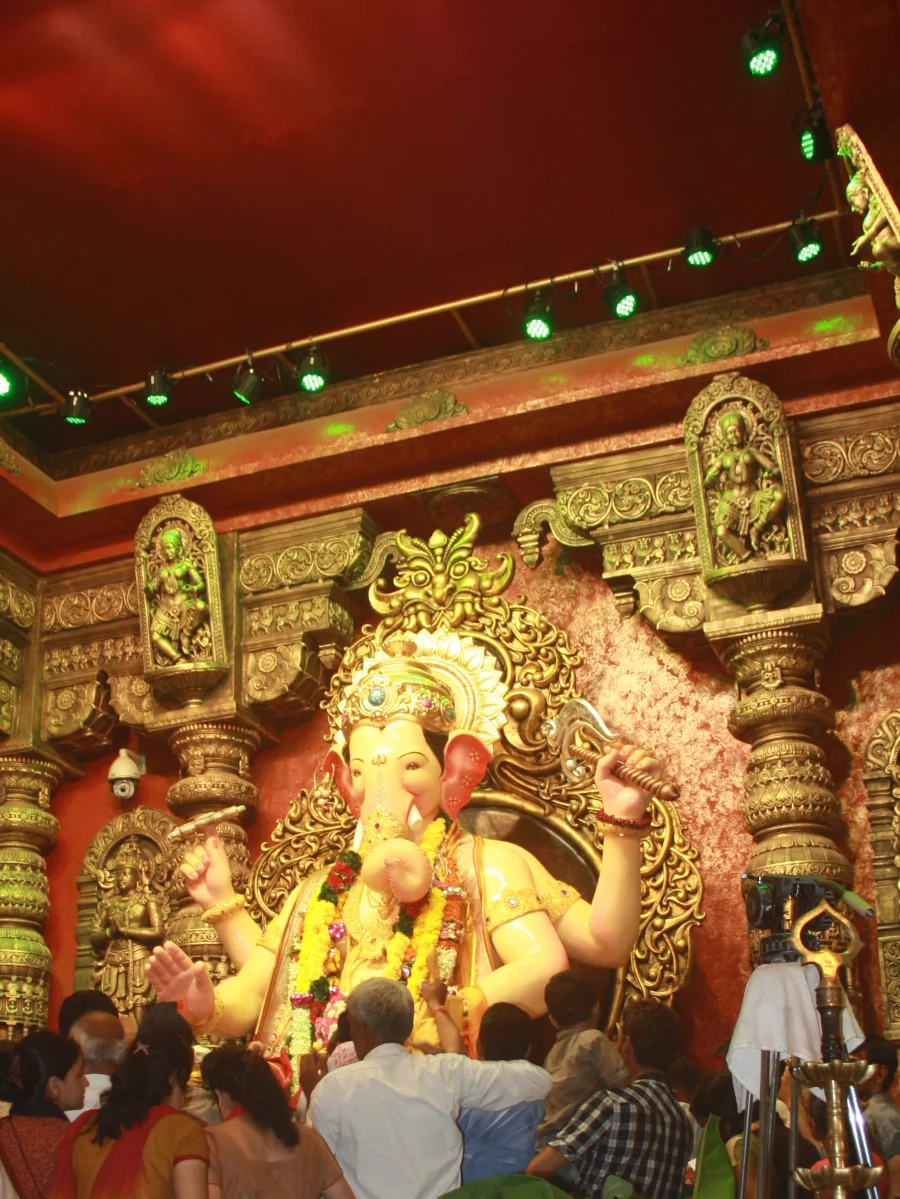
Lalbaugcha Raja, Mumbai
The name most Indians reach for first; the queues alone are part of the story every year.
Official Instagram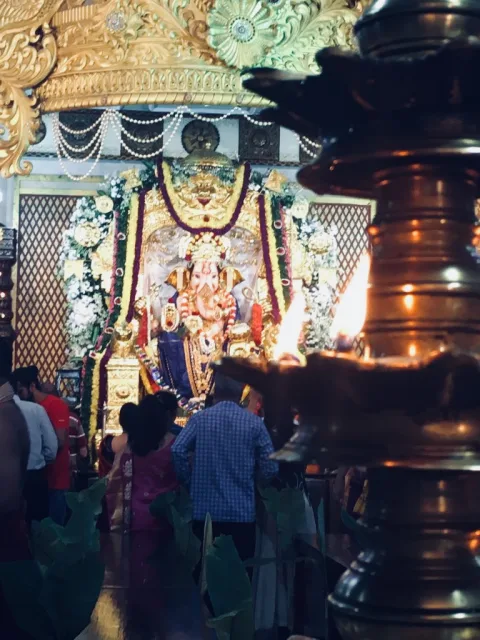
GSB Seva Mandal, King's Circle
Famous for gold and silver ornamentation on the idol, and for insuring it for a headline-grabbing sum.
Official Instagram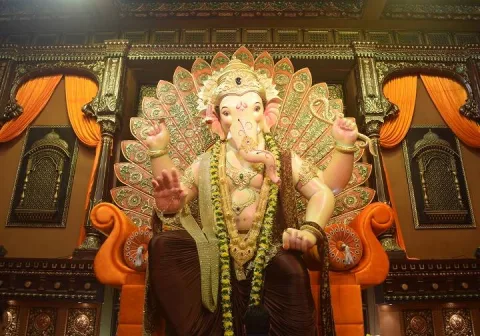
Khetwadicha Ganraj & Mumbaicha Raja, Mumbai
Known for elaborate themed backdrops and sets that change every single year.
Official Instagram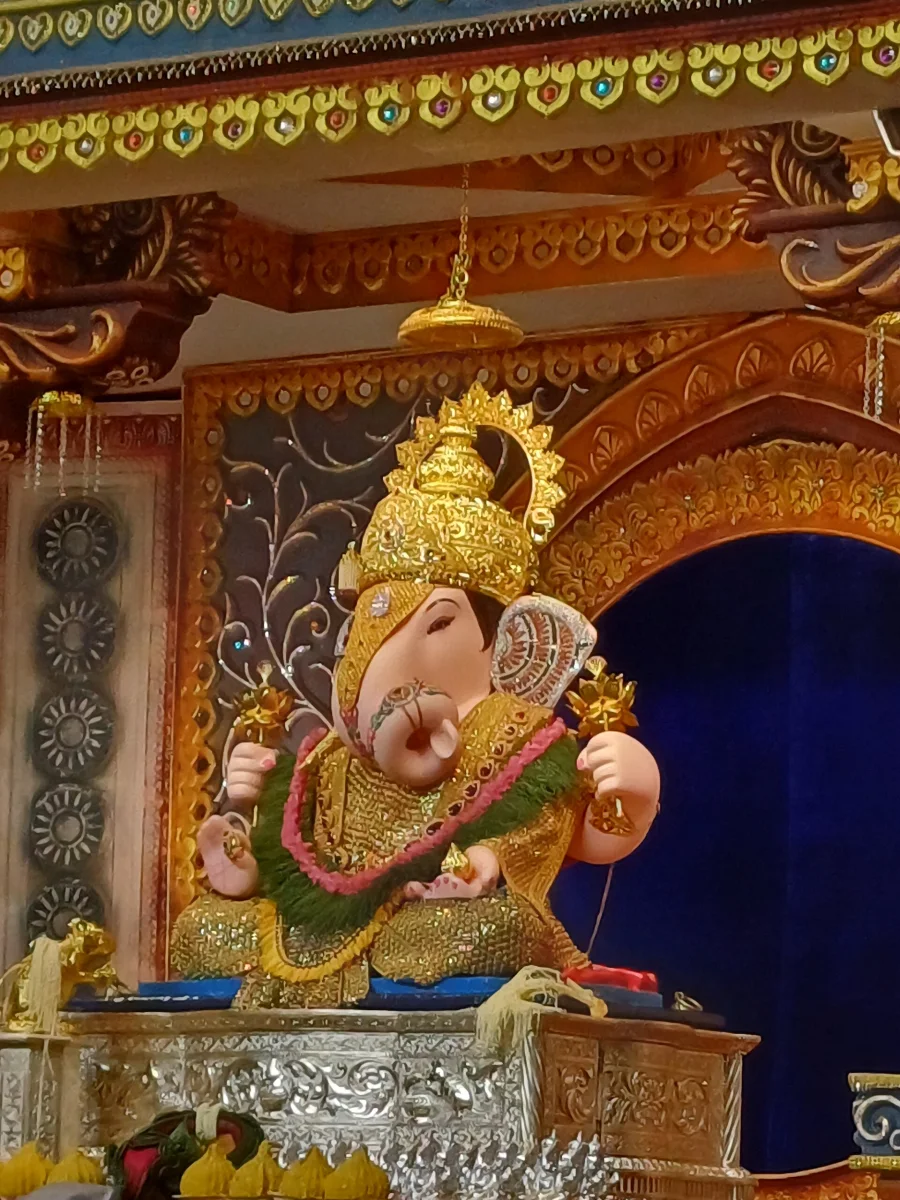
Dagdusheth Halwai Ganpati, Pune
Pune's most-visited pandal, with a decoration budget and scale of its own.
Official website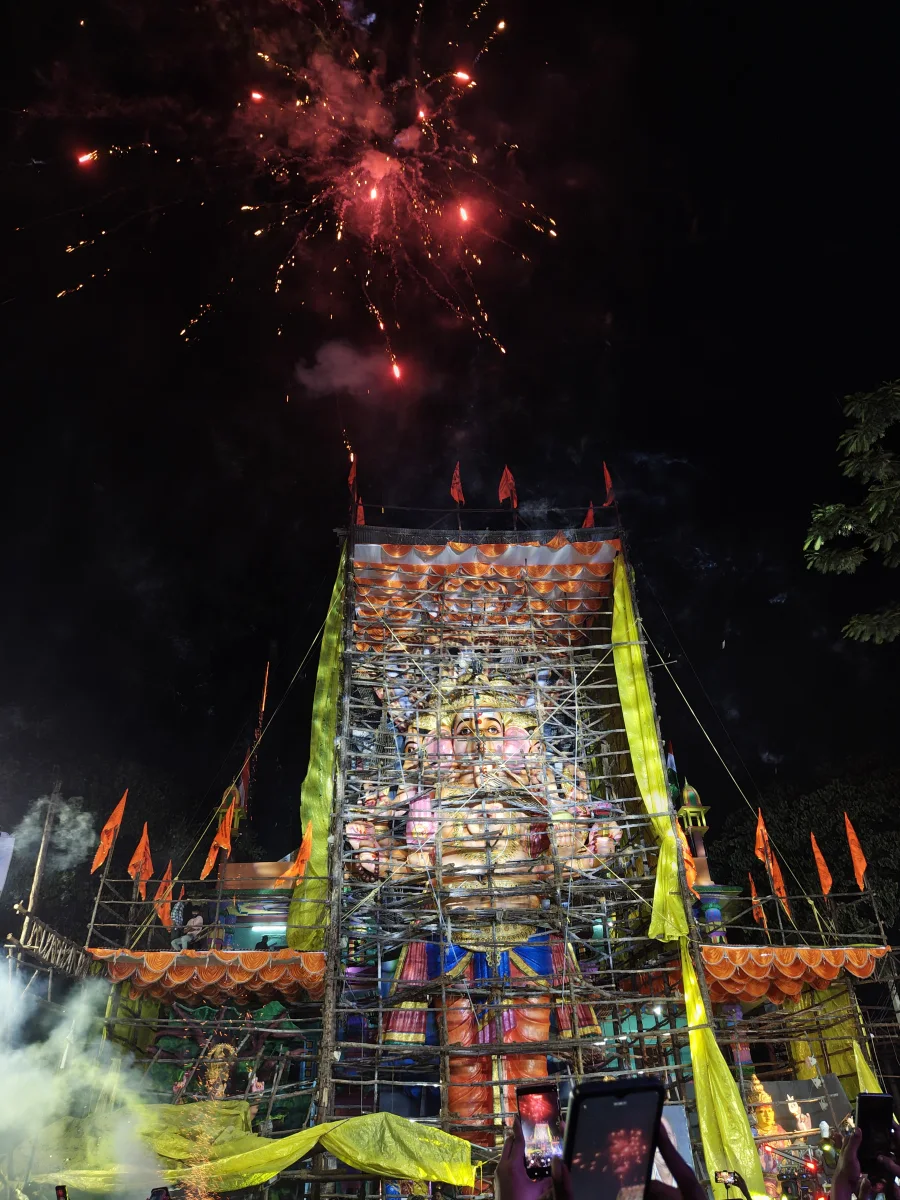
Khairatabad Ganesh, Hyderabad
South India's biggest draw; the 2025 idol, "Vishwashanti," stood 69 feet tall in the mandal's 71st year, built entirely in clay with no Plaster of Paris.
Official website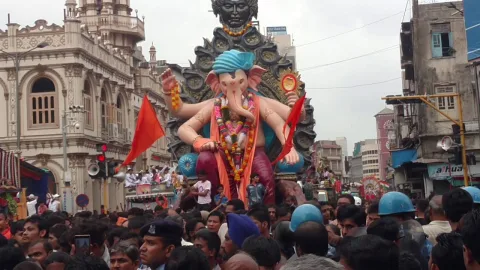
Sarkar Ganesh Utsav & Mahidharpura, Surat
Surat's most iconic public celebration, in a city where the Mahidharpura area alone is known for its dense cluster of varied murtis, and Yuvak Mandals run decades-old, street-by-street pandals.
Official InstagramTrikonbaug Ka Raja, Rajkot
Now in its 28th year at Trikonbaug Chowk, one of many major-intersection pandals that make Rajkot a genuine epicenter, not a footnote, of Gujarat's Ganeshotsav. (Photo coming soon — see their feed below.)
Official InstagramPhotos via Wikimedia Commons, reused under Creative Commons licenses: Lalbaugcha Raja by myriad ways (CC BY 2.0); GSB Ganpati idol by Disha Shenoy; Khetwadicha Ganraj; Dagdusheth Halwai Ganpati 2024 by DesiBoy101; Khairatabad Ganesh 2025 by Kavali Chandrakanth KCK; and Ganesh Visarjan, Surat by Annki777 — all CC BY-SA 4.0 unless noted.
6 murti & pandal styles going viral this Ganeshotsav
Beyond the household names, here's what's actually shifting — the styles more mandals are copying this year, and why each one is spreading.
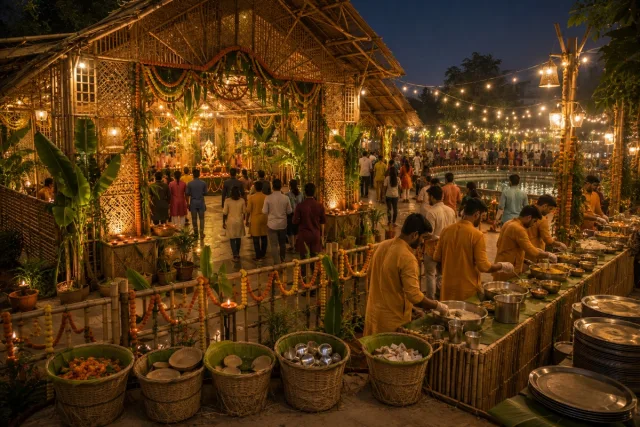
1. Zero-waste, shadu-clay murtis
Small, unpainted or natural-dye clay idols that dissolve cleanly in a bucket at home are the single fastest-growing style — pushed by pollution-board rules and, increasingly, by mandals wanting the "eco pandal" reveal video for themselves.
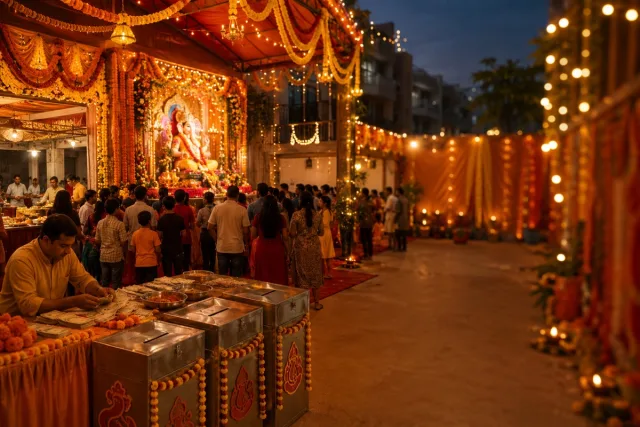
2. Mythology and social-message dioramas
Full-scale sets — a mythological scene, a replica temple, or a social-awareness tableau built around the murti — remain the format that travels furthest as photo and Reel content, because there's simply more to film.
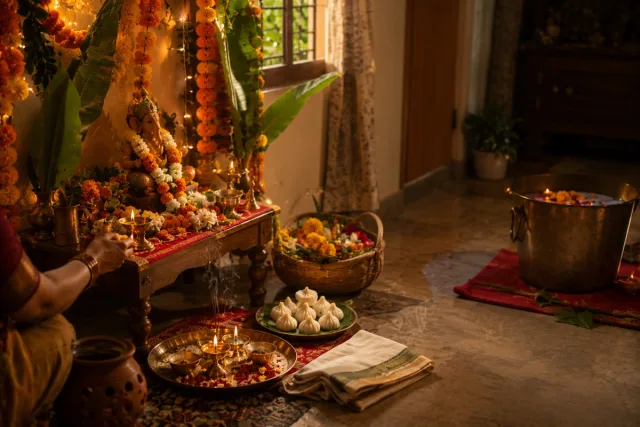
3. Compact 1.5-day home murtis
Space-constrained apartments are normalising small, one-and-a-half-day idols — easier visarjan, lower cost, and a decoration style built around a single bay window or balcony rather than a full pandal.
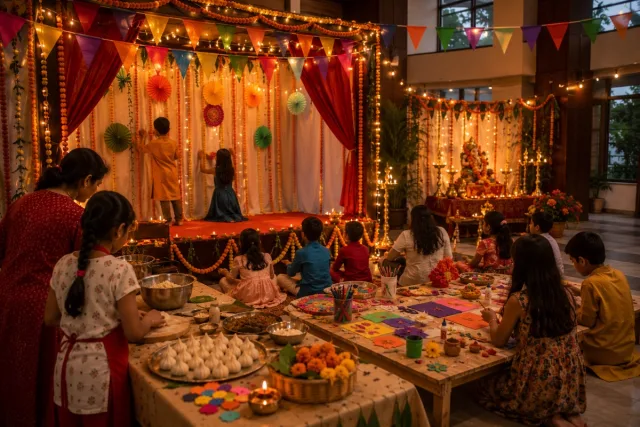
4. Kids' cultural programmes around the murti
Apartment mandals are leaning into aarti-and-talent-show evenings — dance, singing, fancy dress — filmed with the decorated idol as the backdrop, turning the murti into a stage rather than just a shrine.
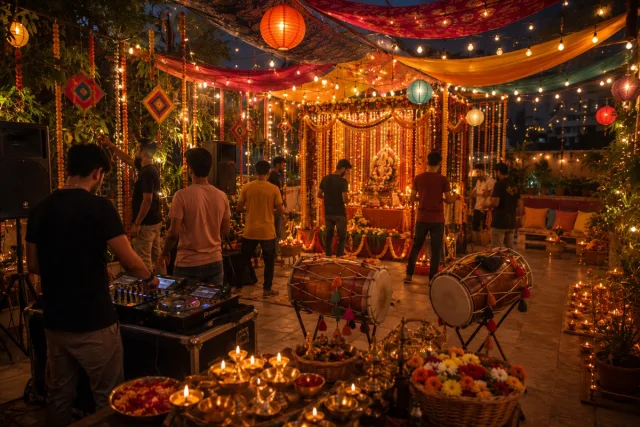
5. Youth & friends-group mandaps
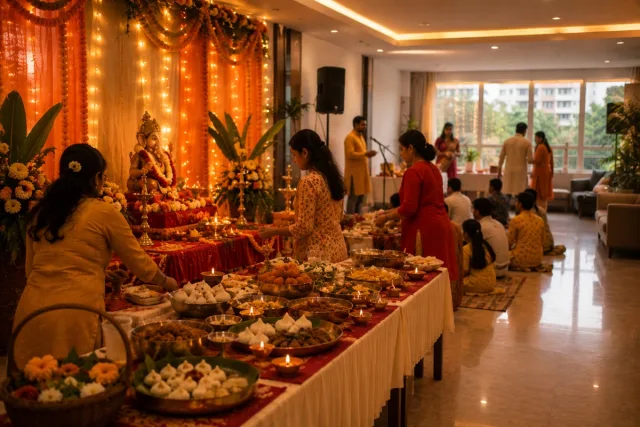
A younger, budget-conscious crowd is running its own smaller mandaps — DJ-led visarjan processions, minimal but sharp decor, and a heavy Instagram-first approach to documenting the whole thing.
6. Theme-park pandals from Gujarat's Yuvak Mandals
Surat and Rajkot's youth mandals run their own annual theme war — full-scale replicas of the Konark Sun Temple, Char Dham, the Eiffel Tower or a Samudra Manthan set, rebuilt from scratch every single year and judged as much on craft as on devotion.
Region by region: how India celebrates differently
| Region | Known for |
|---|---|
| Maharashtra (Mumbai & Pune) | The largest, most elaborate sarvajanik mandals in the country, and the biggest visarjan processions — the benchmark most other cities compare against. |
| Gujarat (Surat, Rajkot & Ahmedabad) | Not a "newer" scene at all — a dense, decades-old, hyperlocal one. Surat's Mahidharpura area alone is known for its cluster of varied murtis, Rajkot runs "thousands of public and household installations" every year, and both cities are built around Yuvak Mandals that treat a fresh, elaborate theme set as non-negotiable annually. Ahmedabad blends the pandal with garba and cultural competitions over a full 10-day run. |
| Telangana & Andhra Pradesh | Hyderabad's Khairatabad Ganesh is the marquee draw — the 2025 idol reached 69 feet in the mandal's 71st year — alongside Balapur's famously massive laddu auction. |
| Karnataka | Bengaluru Ganesha Utsava has run continuously since 1962, now an 11-day event at National College Grounds, Basavanagudi — one of the oldest organised Ganesh Utsavs outside Maharashtra. |
| Tamil Nadu | Vinayagar Chaturthi is celebrated widely. Tamil Nadu was the first Indian state to ban Plaster of Paris idols, back in 2004 — courts later struck down the manufacturing ban itself, but a ban on selling and immersing PoP idols still stands, with natural clay idols explicitly permitted. |
| Delhi-NCR | A genuinely newer scene — what began as a private ritual for the capital's Maharashtrian diaspora has, over the last two decades, grown into citywide pandals from Dwarka to Mayur Vihar, with eco-friendly idols now a growing part of that same shift. |
Sources: Khairatabad Ganesh (Wikipedia), Bengaluru Ganesha Utsava, Ganesh Chaturthi (Wikipedia), and local reporting from Surat and Rajkot city guides.
The real viral story: eco-friendly is mainstream now
Strip away the individual idols and the bigger trend of 2026 is this: eco-friendly murtis have gone from a niche talking point to a default choice for a large share of mandals. Plaster of Paris bans, artificial immersion tanks set up by municipal bodies, and social pressure on Instagram itself have all pushed shadu clay, natural dyes and smaller idol sizes from "nice to have" into "what most new mandals just do."
If your society or mandal is weighing this shift, UtsavMitra's eco-friendly Ganesh Chaturthi template bakes the budget, task list and visarjan plan around exactly this style of celebration.
Want your mandal's reveal video to pop? Get the boring stuff sorted first
Every viral murti moment sits on top of weeks of unglamorous committee work — wargani collected on time, a decoration budget that doesn't blow the hisaab, and a visarjan-day task list nobody drops. That's the part that never makes the Reel, but it's what actually decides whether the creative side of the mandal has room to focus on the murti and the pandal at all.
UtsavMitra keeps that side running quietly in the background — one shared hisaab for the whole committee, wargani tracked with WhatsApp receipts, and tasks assigned so the reveal-day scramble doesn't fall on two or three people. See how it works on the Ganesh Chaturthi app page.
Frequently asked
Which Ganpati mandal is the most famous in India?
Mumbai's Lalbaugcha Raja is the best-known name nationally, but GSB Seva Mandal, Khetwadicha Ganraj and Mumbaicha Raja draw enormous crowds too, alongside Pune's Dagdusheth Halwai Ganpati and Hyderabad's Khairatabad Ganesh.
Are eco-friendly clay Ganesh idols becoming compulsory?
Tamil Nadu became the first Indian state to ban Plaster of Paris idols in 2004, and Gujarat, Maharashtra and Goa followed. Courts later struck down outright manufacturing bans, but bans on selling and immersing PoP idols in water bodies still stand in several states, which is why shadu clay (biodegradable) idols have gone mainstream rather than staying a niche choice.
What size murti should our society or apartment choose?
Most apartment and housing-society mandals keep idols compact (1–3 feet) for easier visarjan and to fit clubhouse spaces — public sarvajanik mandals with dedicated pandals are the ones that go for the large, elaborately themed murtis.
Why do reveal videos and Reels matter for a mandal's visibility?
The first darshan of a decorated murti is the single most shared moment of a mandal's festival online — a clean reveal clip, filmed with good lighting right after decoration wraps up, is what tends to travel furthest on Instagram and WhatsApp.
How can UtsavMitra help our mandal beyond the murti and decoration?
UtsavMitra handles the parts that don't make it into the reel — wargani collection, budgeting decoration and pandal costs, assigning visarjan-day tasks, and keeping one shared hisaab the whole committee can see, so the team's energy stays on the creative side.
Keep reading
Run your Ganpati mandal on UtsavMitra
Wargani, budget and visarjan tasks in one shared hisaab.
Planning Diwali next?
Budget your society's Diwali celebration the same way.
Navratri & Garba committees
Track passes, chanda and nine nights of tasks.
Durga Puja pandal committees
The same shared-hisaab approach, built for pujo.